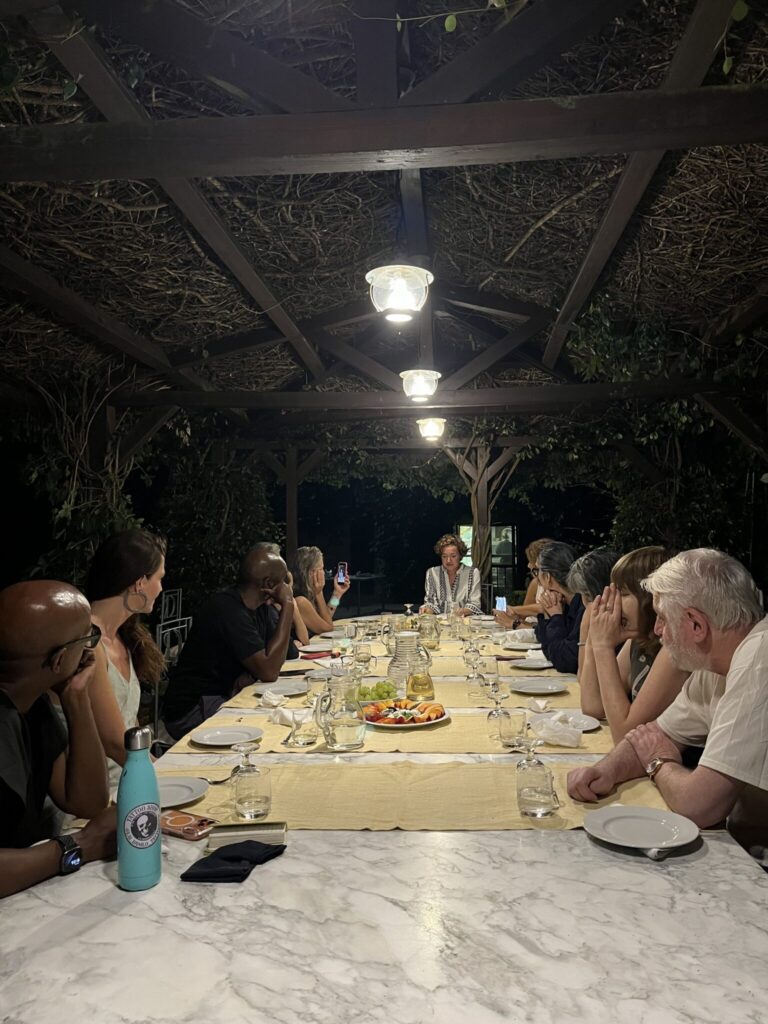
September 14, 2026 — In Group 3, two of the Fellows’ shared dinners originated with recipes brought to the Castle by members of the cohort. Director’s Guest Polly Russell collaborated with the kitchen to create a recipe from the 19th-century American writer Elizabeth Robins Pennell, the subject of Polly’s research while at the castle. Pennell’s book, A Guide for the Greedy, By a Greedy Woman, extolled the virtues of gluttony and culinary adventure. (Polly also took a day to cycle, as Pennell did in 1884, from Perugia to Assisi.)
Writing Fellow Isabella Hammad spent an afternoon in the kitchen sharing the secrets behind the preparations of a family recipe for Maqluba, or “upside down,” a traditional Middle Eastern rice dish that is dramatically flipped at the time of serving.

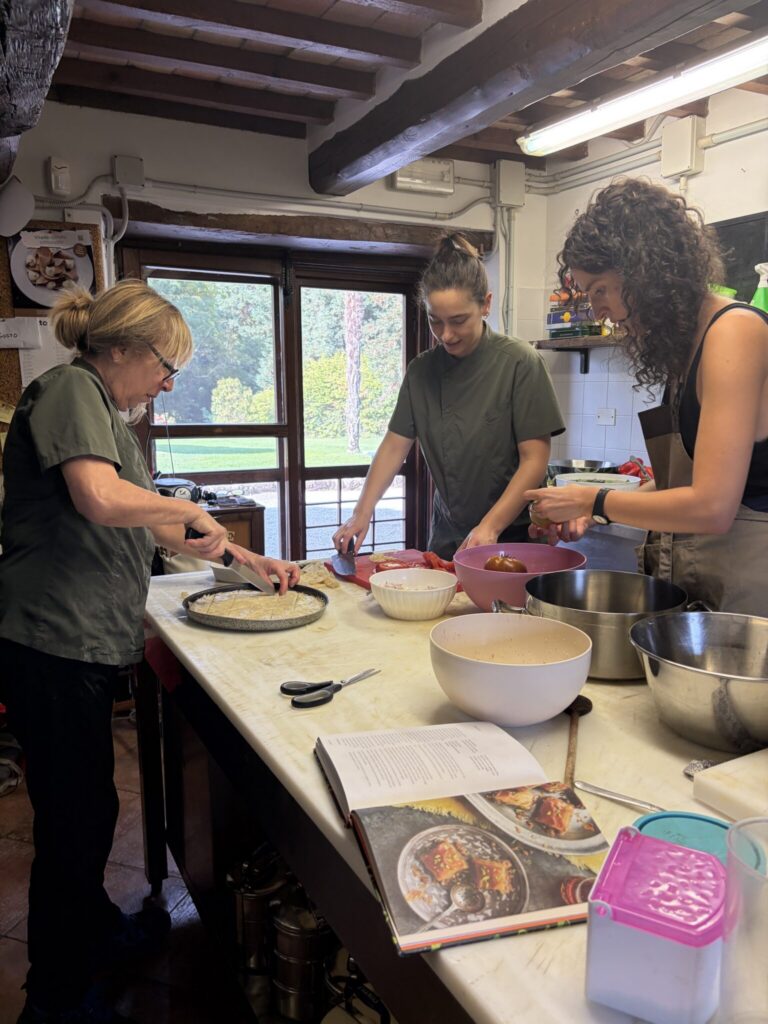
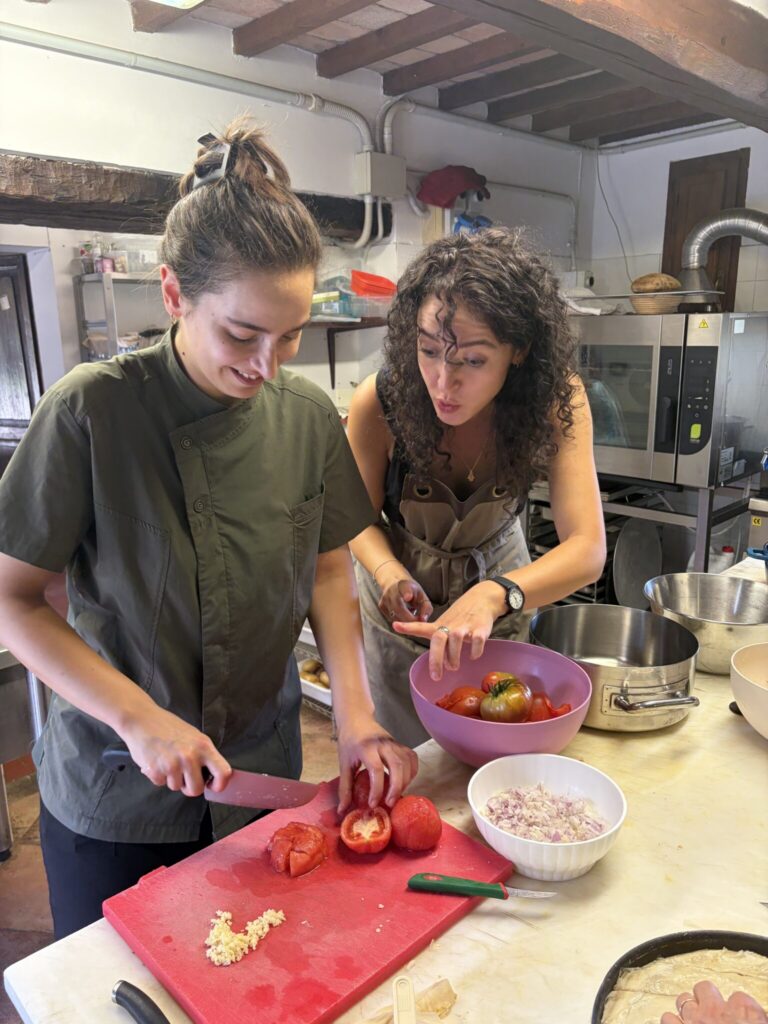
Maqluba
7 spice mix:
- Nutmeg
- Cumin
- Coriander
- Cloves
- Cinnamon
- Black pepper
- Allspice
- Turmeric
- A few cardamom pods
Big potatoes (to slice for the bottom layer)
A few big tomatoes
Aubergine (eggplant)
Rice
Chickpeas for a vegetarian option
Chicken, beef or lamb for a meat option
Chicken stock (/vegetable stock for the vegetarian option)
Pine nuts and blanched almonds
Olive oil
Lots of fresh parsley
Serve with yogurt on the side and/or a simple salad of cucumber, tomato, parsley, sumac with lemon and olive oil.
Elizabeth Robins Pennell
Polly presented the meal to the Fellows by “inviting Pennell to the table to meet all of you, my new brilliant friends. I’m certain she would love this: besides advocating for women and cycling she was one of the foremost art critics of her day, a champion of Whistler. She hosted regular Thursday salons at her house in London where people like Aubrey Beardsley, George Bernard Shaw, Henry James and Oscar Wilde gathered. How could she not be thrilled to be in company at Civitella?”
The meal Polly and Debora prepared took inspiration from Pennell, an eater who wrote about eating—not cooking—with gusto. And, in a time when all gastronomes before her were men, Pennell claimed a space at the table for women and “was full frontal pornographic about the pleasures of a good meal,” Polly said in her introduction at the table.
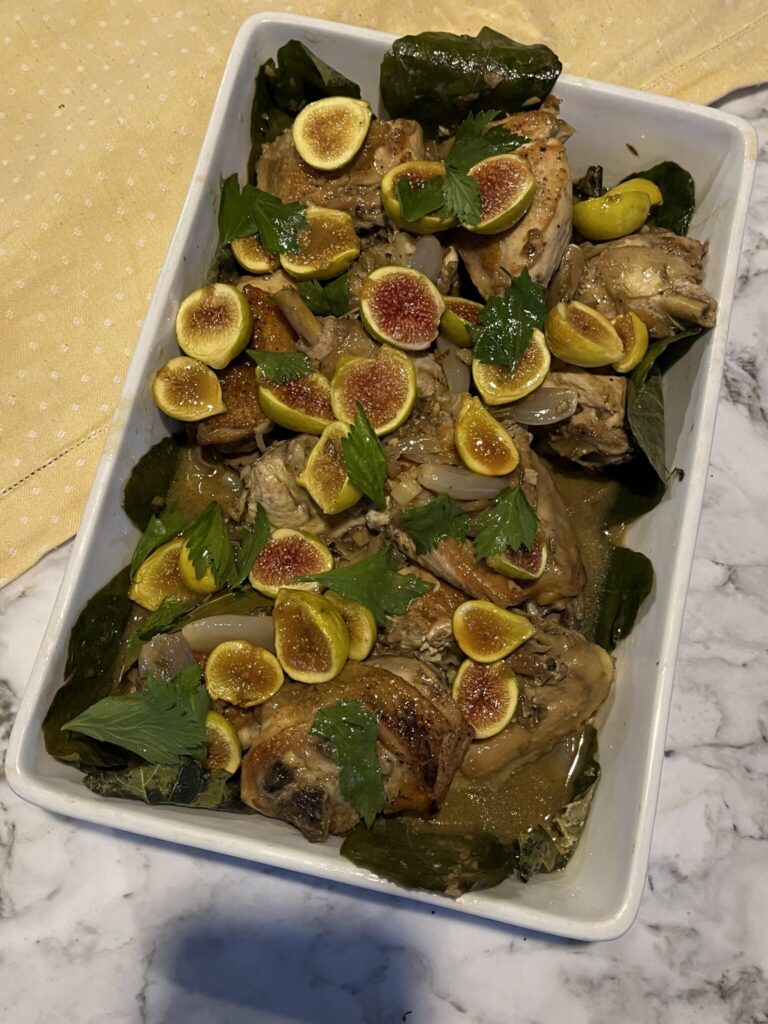
The dinner started with pot-roasted chicken with caramelized fig, polenta with sage butter and a green herb salad. Pennell championed Italian food long before a post-second world war generation of British and Americans discovered the delights of basil or pasta. Polly noted that Pennell was always seasonal and attentive to location so she swapped the recipe’s tomatoes for figs, paired with polenta and sage from the garden and then followed Pennell’s instructions on a salad: dressing made with oil, mustard and vinegar, lettuce, basil and mint and the salad bowl rubbed with onion.


Next was a very simple dessert of peaches and local goat’s cheese. “Interestingly,” Polly said, “Pennell never wrote about cakes or sweets or puddings but that’s a whole other story. She usually advised ending a meal with fruit and cheese, and ideally cognac or coffee. She loved peaches—for their beauty and their taste—and she loved a regional sharp cheese to contrast.”
Finally, dinner concluded with a “conversational savoury,” Polly’s gesture towards getting to the difficult part of Pennell. “Like the visit of an ancient aunt who has lived an interesting life but can be difficult or objectionable, I bring her to the table with caveats,” Polly said. Polly thanked Writing Fellow Lina Attalah especially for reminding her to draw attention to Pennell’s positionality: her privilege as being both the thread which made her being marvellous possible, and also the source of her monstrosity, namely her racism and antisemitism.